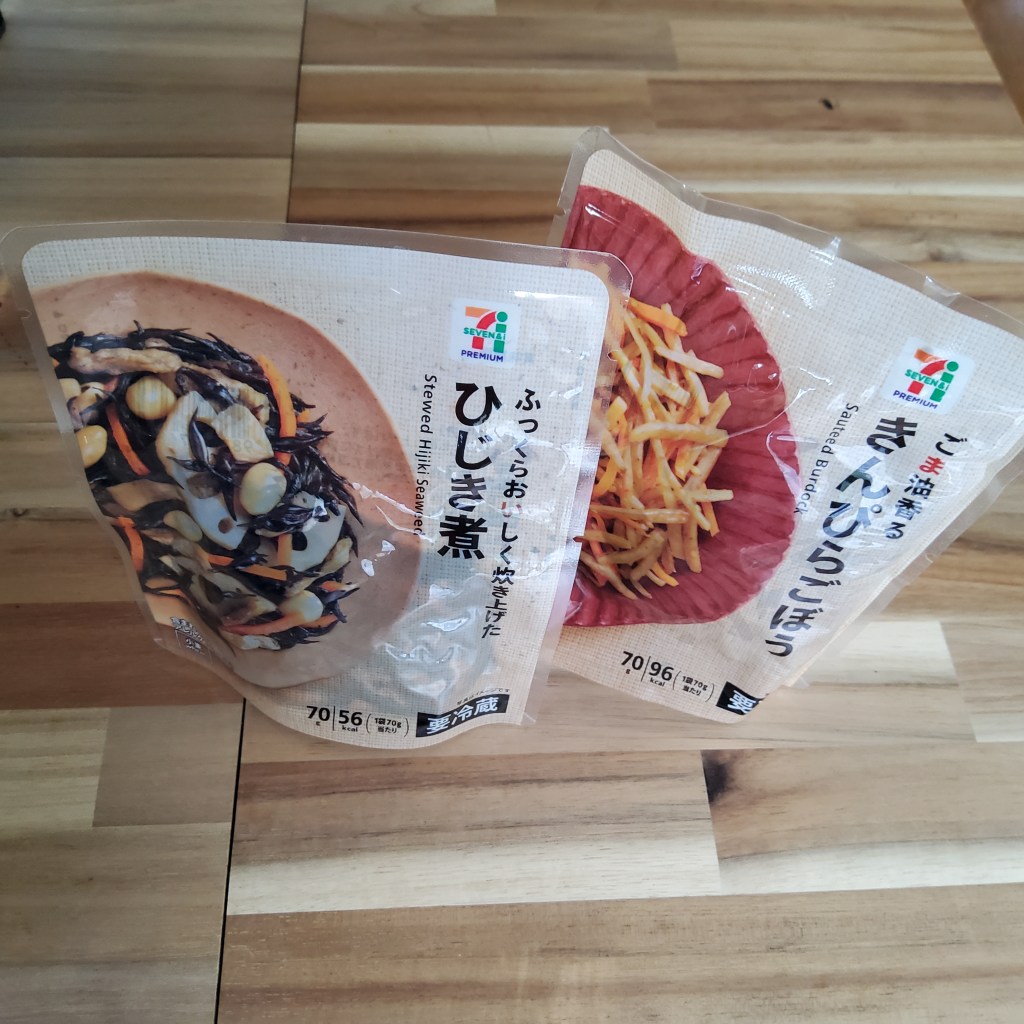
Japan has a long history dating back to the first recognized emperor, Emperor Jimmu, recorded as beginning his reign in 660 b.c. Over that time, Japan has gone through many cultural periods and changes in their diet. While Japanese cuisine is dominated by products of the ocean, there are some vegetables that also have a long history here.
Burdock is a root vegetable that was originally brought here from China for its medicinal properties. During the Edo period, burdock became a popular staple in the Japanese diet. Today, burdock is available in many forms at convenient stores.
The sauteed burdock with carrots was tasty. It had an earthy, starchy, buttery taste that would most definitely pair well with the salty fish flavors that are often also available at the 7/11. I enjoyed the burdock more than the taro root, from a few days ago, which to me tasted much more doughy and had a sticky feel to it.
Hijiki, the other side dish I chose to sample this morning from 7/11, is another example of an ancient Japanese food. It is a seaweed that conveniently fit into Japanese dietary needs. Many say that in the ancient times of Japan there was a calcium difficiency in the food because the soil in Japan does not contain calcium. Early Japanese people overcame this agricultural deficiency by harvesting hijiki seaweed to fulfill their calcium needs.
The flavor of seaweed is typically salty and slightly greenish bitter. However, the prepared side version of hijiki I enjoyed from 7/11 was mixed and stewed with chestnuts, carrots and lotus. This combination was tasty and nutrious.
The main thing I have found missing from convenient store food is bright vegetable flavors, but this can also be because it is January and none of that is really in season right now. Cabbage seems to be the only vegetable I can find right now.
 Making Food Blog
Leave a comment