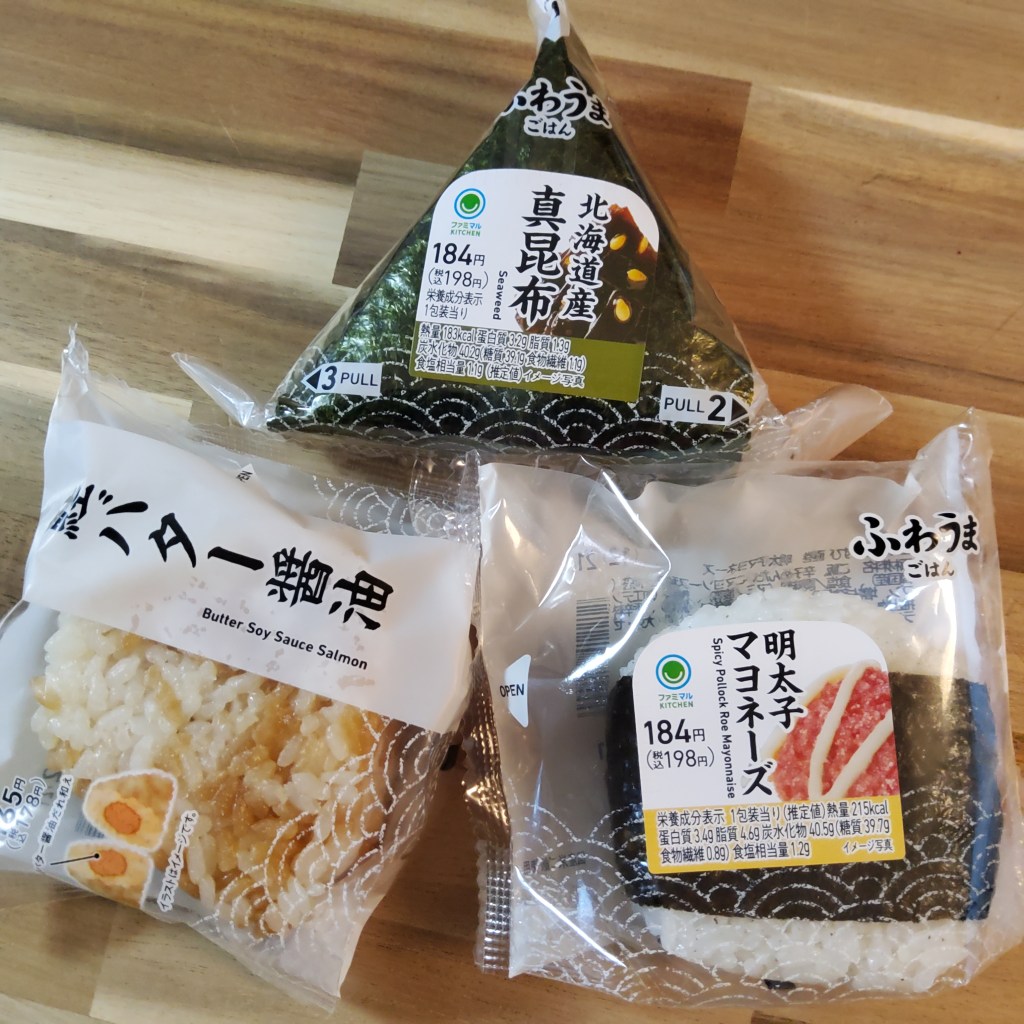
While here in Japan it is very easy to start my day with onigiri. The onigiri is a simple triangle rice ball wrapped in seaweed and filled with various savory fillings. These are universally available in Japan because they are basically portable rice balls that are eaten with no mess once you master removing the packaging that seperates the seaweed from the rice.
Eating rice balls is believed to have been part of Japanese culture for over 2000 years, but the onigiri form of rice balls quickly rose in popularity and prevelance when a machine to mass-produce them was invented in the 1980s.
The ones I buy at convenient stores in Japan are most likely produced using automation, but hand-made onigiri can also be easily found in smaller stands and stores across the country. For example, there is a well known tiny ‘foodtruck” in Hiroshima that is famous for its fresh onigiri.
The variety of flavors and combinations of onigiri available at convenient stores in Japan is pretty broad because a lot of people eat these on a fairly regular basis. I think the demand pushes manufacturers to produce a constant variety that usually includes a type of ocean-based food in a sauce added to the center of the rice cake.
Today I was pleasantly surprised by the kelp onigiri I chose because, despite not having any description of sauce or seasoning, it tasted less like sea vines and more like barbecue. Now, I do not throw that term around lightly because I am a professional barbecuer and I take barbecue seriously. However, the flavor of this kelp mixed with the soft sweatness of the rice to give this onigiri the flavor of a subtle sweat barbecue sauced dish.
I was surprised by the barbecue flavor resulting from this combination, but I also thought this was an important discovery that I should keep in my backpocket. My greater vision for the MakingFood.blog is to use it as a referencable road map for those seeking and supporting greater food access.
I understand that one of the obstacles food-access activists face is that nutrient dense whole foods are not always appetising or inherently tasty. In a food culture centered around sweet, eating nutrient dense plants can be a hard sell. Learning that a nutrient dense food like kelp can be prepared in a way that gives it a barbecue sweetness is definitely a recipe that I can gladly include as I’m trying to develop my own nutrient dense eating habits.
 Making Food Blog
Leave a comment