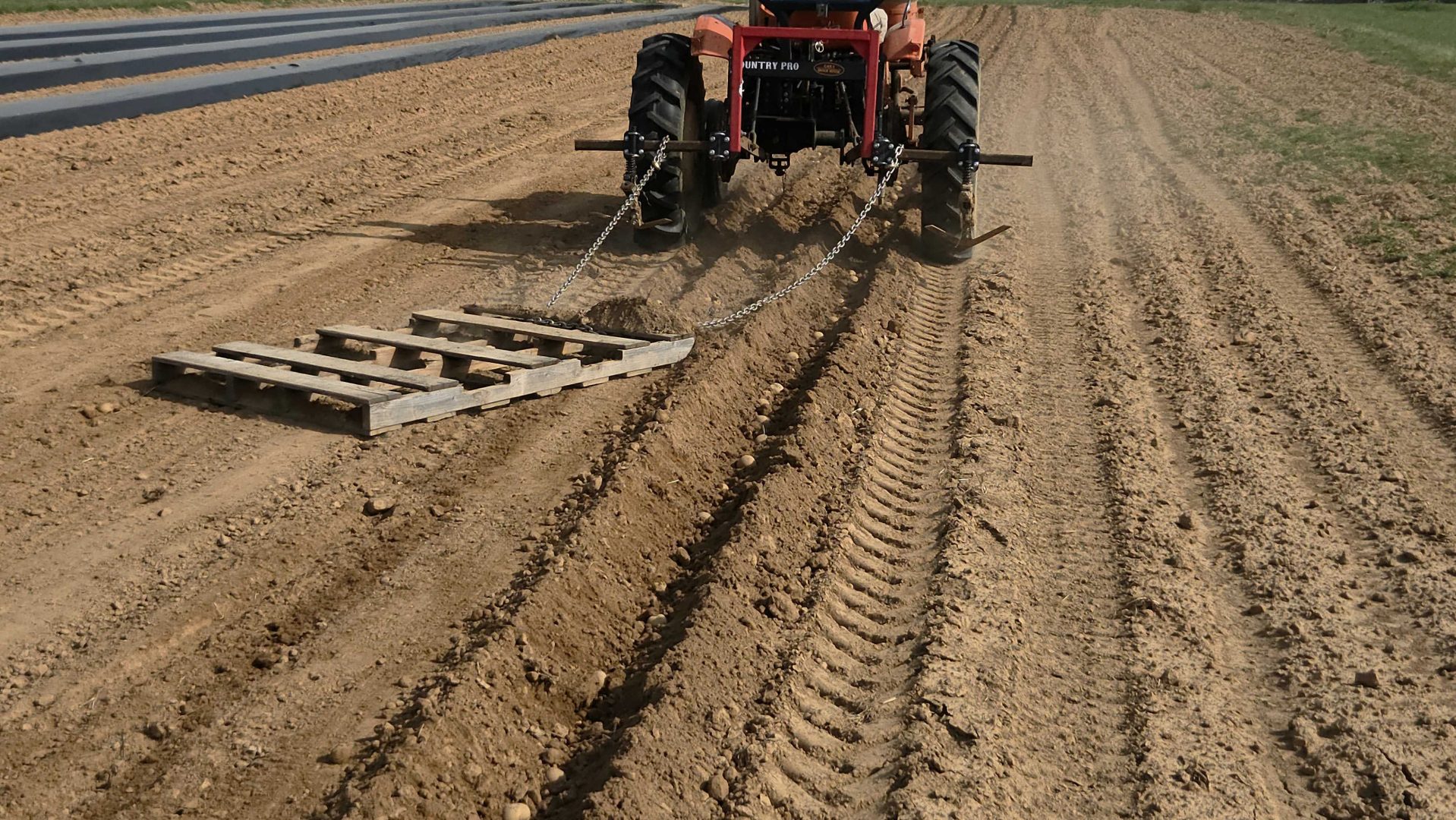
The funny thing about the school farm I work on is that there is a tool or machine for most everything I need to do. Even when we have to improvise, it is usually done with some other tool that is modified for use. This palette drag was the first time, I can remember, that we made something totally improvised to accomplish a farm task.
It is a great reminder that farming involves a lot of improvisation. There is a lot of just-figure-it-out, and that really is some of what I love about it. There are a million ways to do most tasks, and the one that is right is the one that works; which is to say there are multiple right answers. The objective is grow and harvest saleable produce, and how a farmer gets there is really up to them.
There are many different constraints and models like certified organic, naturally grown, regenerative, sustainable, and on and on that create parameters/limitations for the farmer. But that is simply defining the playing field; a farmer is free to invent and explore methods within the constraints of the rules, which means there are still infinite possibilities.
I’m not sure exactly which of those parameters I will choose to play in. There are additional factors that I will be constrained by, like the fact that I don’t own any land yet. I will even have to deal with the constraints imposed by the customers I choose to sell to because there are plenty of people with strong opinions about how the food they purchase should be grown.
Whatever and wherever I start farming next year, there are going to be a lot of limitations and challenges that I need to navigate. Mostly I need to know what the rules are and how to follow them. However, some of the challenges that lay ahead are simply situations that will need to be solved with improvised solutions. I look forward to meeting those challenges head on with my own palette solutions.
Leave a Reply