Anyone who has ever grown anything has experienced the ups and downs of trying to shepherd a plant through its life stages to produce something you want. On an individual plant scale, this can be frustrating, but relatively manageable. But on a commercial scale, this can get outrageously difficult. Especially when you factor in multiple plant families and an abundance of variables to manage.
I am not really here to give you advice for farming on this blog; this is more a place for me to share my experience in learning to farm. Hopefully, you can find some value in reading about my challenges.
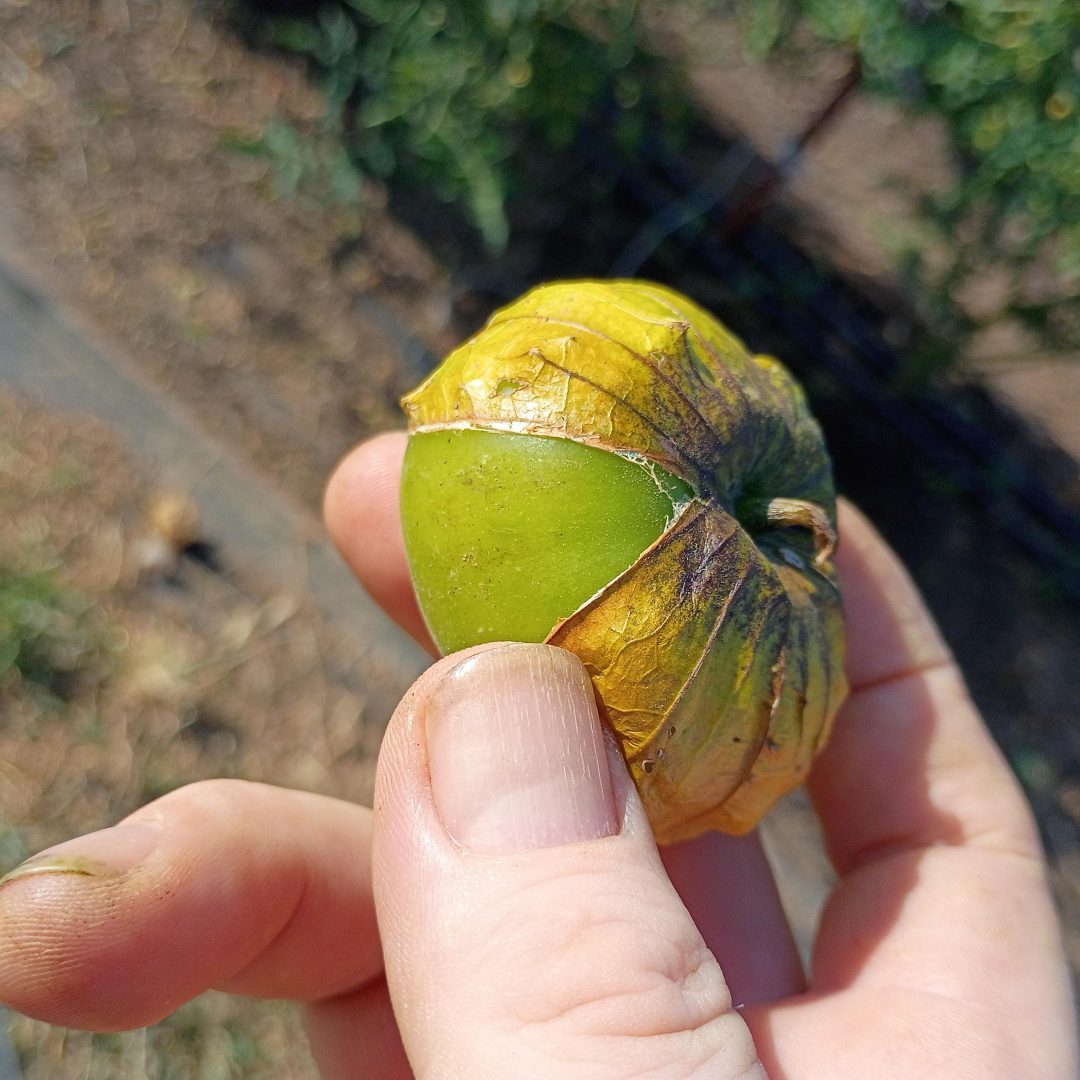
That said, the tomatillos we grew are like determinant tomatoes in the way they grow. Bushy and requiring trellising. The primary struggle has been caterpillars. Each time there is a hole in the side of the paper husk, that means a caterpillar has burrowed in and is eating up the fruit. Ninety-eight percent of our tomatillos have been lost to caterpillar damage.
There are 10 plants in the bed, and only three of them are still healthy. The thing to do next week it to cut out the diseased and dead plants, and spray the three healthy ones again to try to give them a fighting chance to bring tomatillos to market next week.
It is disappointing to have seen them grow so beautifully and then to have lost all the fruit to pests. It’s a reminder that nothing is automatic on the farm. Just because you have nice plants, doesn’t mean you’ll get nice fruit, but I think this is why there is such a premium placed on years of experience in the farming world. The lessons i have learned in each failure make it less likely for me to fail in the same way again next time.
For example, I learned that yellow flesh watermelons are smaller and easier to manage than other types, but they are super popular around here because of how unique their flavor profile and textures are. I learned that Tomatillos should probably be grown under insect netting or sprayed weekly with Dipel while they’re fruiting. I’ve learned that Orange Hat tomatoes are only commercially viable if grown in a different way than conventional beds.
That is just a fraction of the things one crop cycle taught me. If I leaned into growing those plants again next year, I’d have an even clearer understanding. So now I have a greater appreciation for what it means when you meet a farmer who has grown specific crops for decades. There is a level of knowing through specific first-hand experience that truly can only be learned in the long, slow, process of doing. There is no short cuts to real lived experience, no matter how much you want it.
Today, I remind myself to embrace the process. Enjoy the journey. And learn from the experience.
Leave a Reply